USA PALLETRecycle
Recycling Services

Pallet Recycling That Protects the Planet and Your Bottom Line

Every year, over 400 million pallets end up in U.S. landfills. Our recycling program transforms that waste into a valuable resource — saving trees, reducing emissions, and putting money back in your pocket.
Request a Quote

Fill in your details and we will get back to you shortly

Fields marked * are required
What We Do

Turning Waste Into Opportunity

At USA Pallet Recycle, we operate a comprehensive pallet recycling program designed for businesses of all sizes. Whether you are a small warehouse generating a handful of broken pallets each week or a major distribution center moving thousands of units daily, we have the infrastructure and expertise to handle your volume.

Our Goodyear, Arizona facility processes over two million pallets annually. Each pallet is individually inspected, graded, and routed to the most sustainable outcome — repair and resale, material reclamation, or conversion into mulch, animal bedding, and biomass fuel. Nothing goes to waste.

The pallet recycling industry plays a crucial role in the American wood products supply chain. According to industry data, approximately 849 million pallets are in circulation across the United States at any given time. Of those, an estimated 400 million are discarded each year. Our mission is to intercept as many of those pallets as possible and return them to productive use — reducing landfill waste, conserving natural resources, and helping businesses save money in the process.

2.5M+Pallets recycled per year
4,200Tons of waste diverted annually
15,000+Trees saved every year
80%Carbon reduction vs. new manufacturing
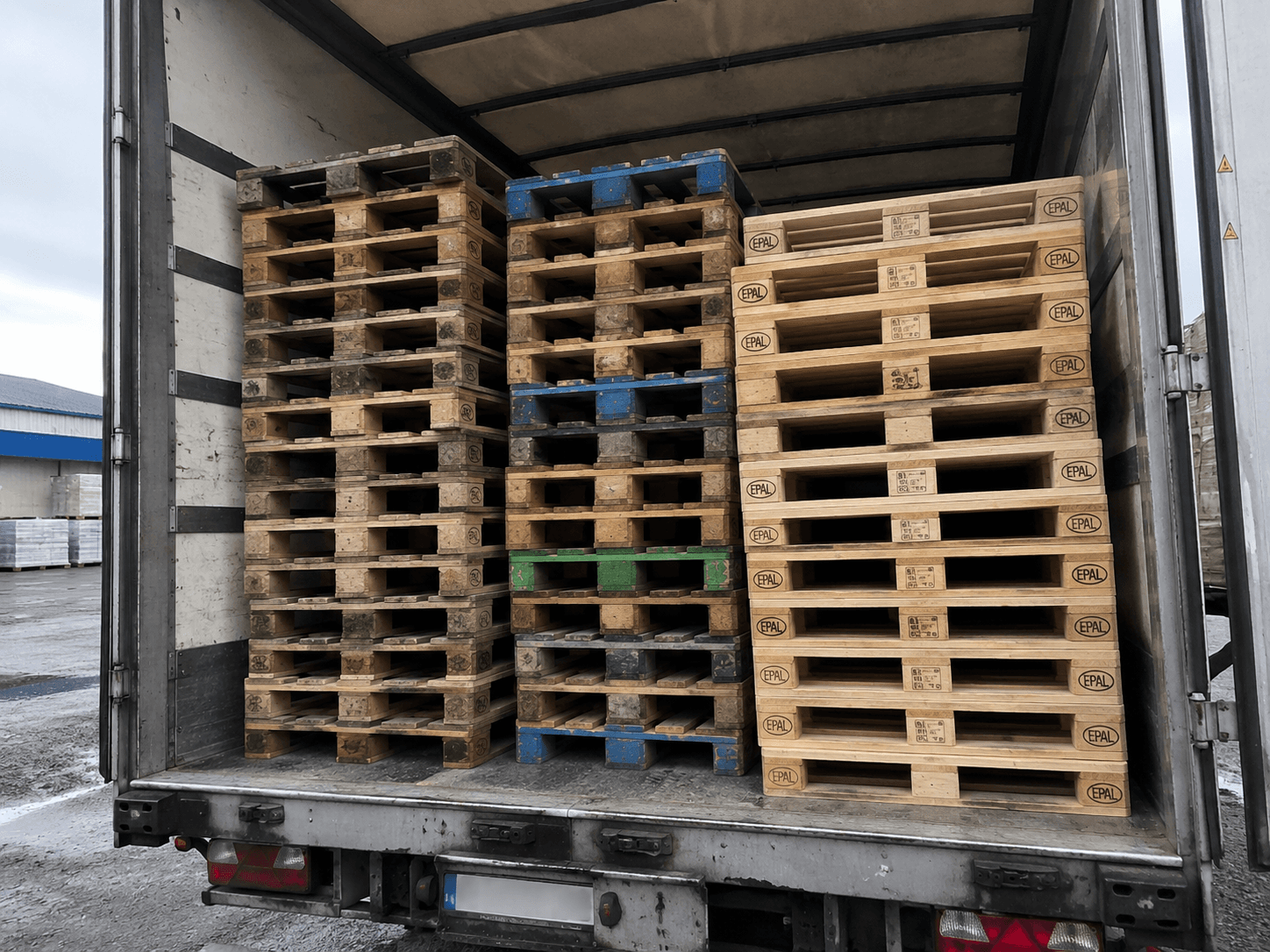
Recycled pallets stacked and sorted in warehouse
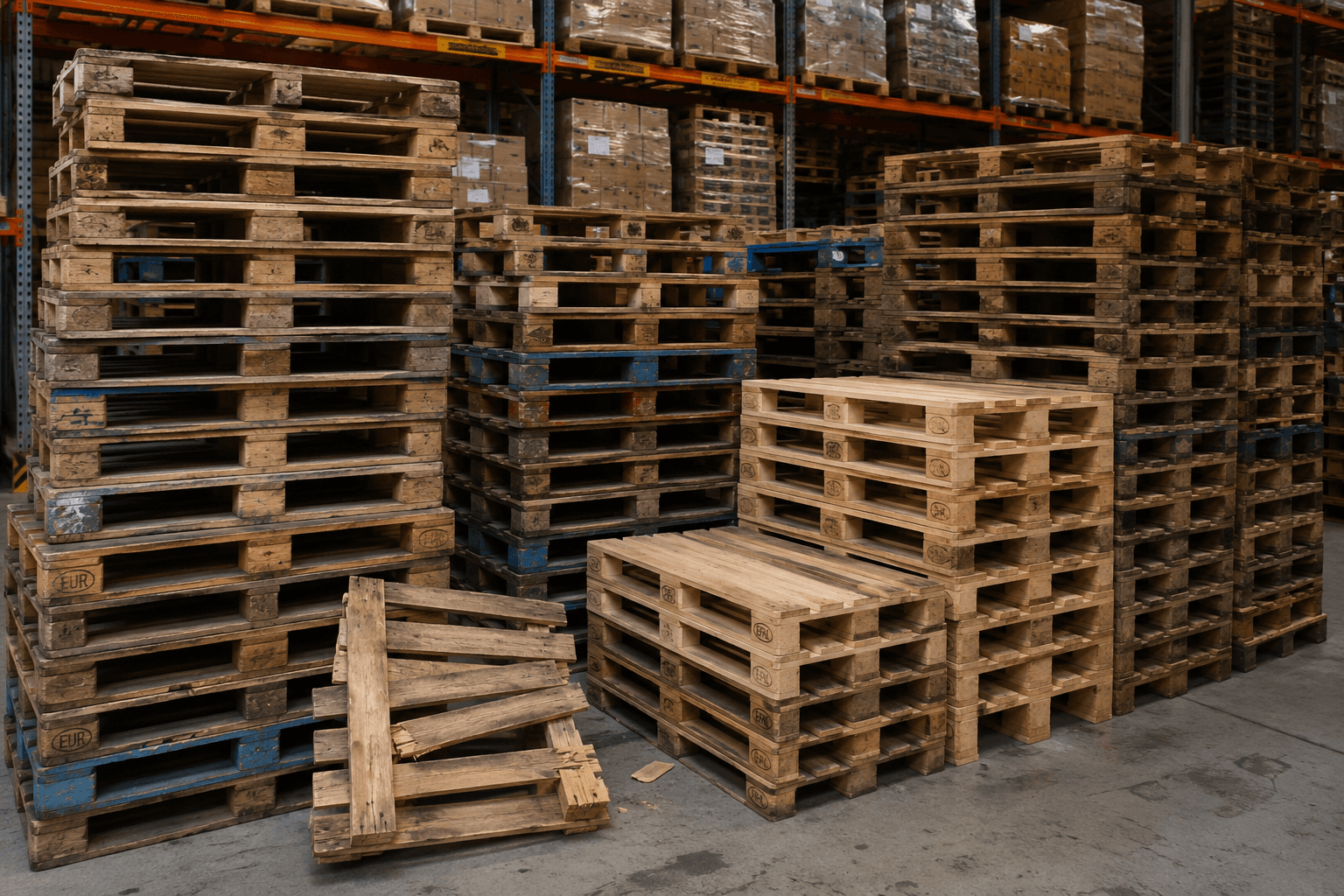
Pallets ready for inspection
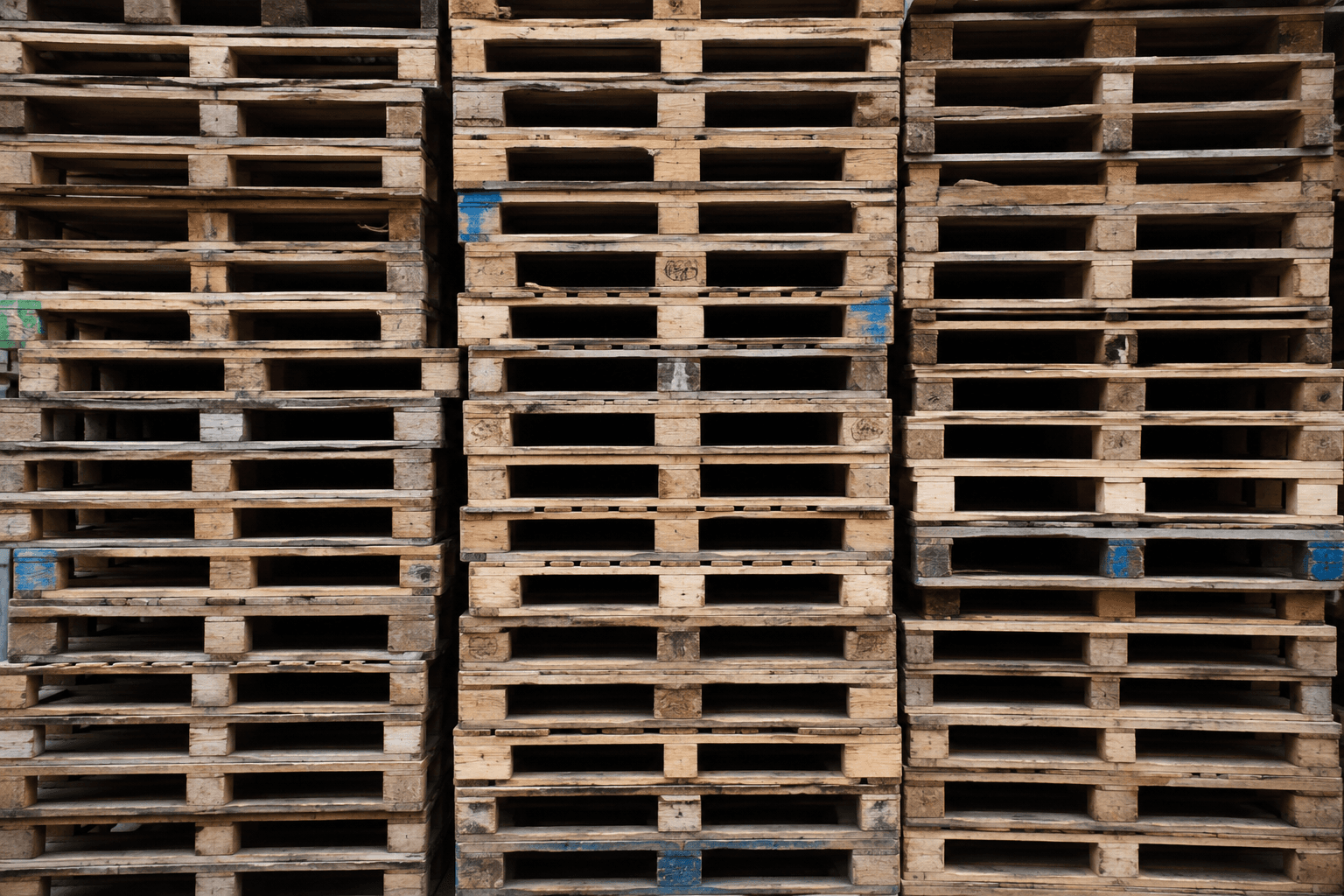
Pallet grading station
Step by Step

Our Complete 10-Step Recycling Process

From initial contact to final disposition, every pallet follows a carefully designed process that maximizes reuse and minimizes waste. Here is a detailed look at each stage.

01

Initial Contact & Assessment

The process begins when you reach out to us by phone, email, or online form. You provide basic information about your pallet volume, types, and location. Our team assesses your needs and provides a preliminary plan that outlines pickup logistics, expected disposition of your pallets, and any applicable costs or credits. For large-volume accounts, we may schedule an on-site visit to evaluate your facility layout, dock access, and pallet accumulation patterns before finalizing the plan.

02

Collection & Pickup Scheduling

Once the plan is approved, we schedule your pickup at a time that aligns with your operations. Our dispatchers coordinate directly with your shipping or receiving team to confirm the date, time window, and any special instructions such as dock assignments or forklift availability. For loads of 50 or more pallets within the Phoenix metropolitan area, pickup is provided free of charge. For recurring customers, we establish automated pickup schedules — weekly, bi-weekly, or monthly — so you never have to call to arrange service.

03

On-Site Loading & Transport

Our driver arrives with the appropriate vehicle for your load size — from stake bed trucks for smaller batches to full 53-foot trailers for high-volume pickups. Our crew handles all loading so your team does not need to divert labor from their core responsibilities. Pallets are carefully stacked and secured for transit to prevent damage during transportation. We provide a count at the time of pickup and issue a receipt documenting the number and general condition of pallets collected.

04

Facility Receiving & Intake

When your pallets arrive at our Goodyear facility, they are unloaded into our receiving area and logged into our tracking system. Each incoming load is associated with your account so that we can provide accurate disposition reporting later. The receiving team performs an initial visual assessment to categorize the load by general condition — this determines which processing line the pallets are routed to next.

05

Detailed Sorting & Grading

Every incoming pallet is individually sorted by size, type, construction style, and condition. Pallets are classified into three primary categories: resale-grade pallets that are in good enough condition to be sold directly, repair-grade pallets that need one or more components replaced or reinforced before they can return to service, and reclaim-grade pallets that are beyond economical repair and will be dismantled for material recovery. This sorting step is critical because it ensures that every pallet is directed to the processing path that extracts the maximum value.

06

Quality Inspection & Compliance Check

Pallets that are classified as resale-grade or repair-grade undergo a detailed quality inspection against NWPCA industry standards. Inspectors check structural integrity, board condition, nail placement, load-bearing capacity, and compliance markings such as ISPM-15 heat treatment stamps for international shipping pallets. Pallets that meet standards are cleared to move forward. Those that fail are reclassified to a lower grade or sent to reclamation.

07

Repair & Refurbishment

Repair-grade pallets are sent to our repair line where skilled crews replace broken deck boards, reinforce split stringers with companion boards, drive protruding nails flush, install missing lead boards, and address any other structural deficiencies. All replacement lumber matches original specifications in terms of thickness, width, and species. All fasteners are ring-shank nails that resist backing out under load and vibration. Each repaired pallet undergoes a secondary quality inspection before being cleared for resale.

08

Material Reclamation & Processing

Pallets that cannot be economically repaired are dismantled on our reclamation line. Usable individual boards and stringers are salvaged for use as repair components in future pallet repairs — this reduces our need for virgin lumber and keeps costs down for customers. The remaining wood material is fed through our industrial grinder, which produces consistent wood chips that are further processed into landscaping mulch, animal bedding, and biomass fuel pellets. Metal fasteners are separated by magnetic extraction and sent to local metal recyclers.

09

Inventory & Distribution

Repaired and resale-grade pallets are moved to our finished goods inventory where they are stacked by size, grade, and type in designated storage areas. This inventory is available for immediate purchase and delivery to customers throughout Arizona. Our inventory management system tracks every pallet from intake through disposition, ensuring accurate counts and full traceability. When you order pallets from us, they ship from this carefully managed inventory.

10

Reporting, Documentation & Compliance Certificates

You receive a detailed disposition report showing exactly what happened to every pallet we collected from your facility. The report includes the total number of pallets picked up, the number repaired and returned to circulation, the number sold as-is, the number reclaimed for materials, and the environmental impact of your recycling effort including trees saved, landfill waste diverted, and carbon emissions avoided. For businesses that need sustainability documentation for corporate reporting, audits, or regulatory compliance, we provide official recycling certificates and environmental impact statements.

Recovery Performance

Material Recovery Rates by Type

Different pallet types yield different recovery outcomes. Here is a breakdown of our average material recovery rates by pallet category based on the past 12 months of processing data.

Pallet TypeRepaired & ResoldLumber ReclaimedMulch & BiomassMetal Recycled
GMA 48x40 (Softwood)68%15%15%2%
GMA 48x40 (Hardwood)72%14%12%2%
Block Pallets60%18%19%3%
Non-Standard Sizes55%20%22%3%
Heat-Treated (ISPM-15)74%12%12%2%
Heavily Damaged25%30%42%3%

*Recovery rates are averages based on trailing 12-month data. Actual rates vary depending on the specific condition and construction of incoming pallets.

Environmental Impact

Impact of Recycling 1,000 Pallets

When pallets end up in landfills, the environmental consequences are significant. Here is a concrete look at the positive impact generated when your business recycles just 1,000 standard pallets through our program.

6.2

Trees Saved

Each new 48x40 pallet requires approximately 12 board feet of lumber. By recycling 1,000 pallets and returning roughly 650 to circulation through repair and resale, you eliminate the need for 7,800 board feet of new lumber — the equivalent of roughly 6.2 mature trees.

3.8

Tons CO2 Avoided

New pallet manufacturing generates carbon emissions at every stage — logging, transport, milling, kiln-drying, and assembly. Recycling avoids approximately 80% of those emissions. For 1,000 pallets, that translates to roughly 3.8 metric tons of CO2 that never enter the atmosphere.

4.1

Cubic Yards Landfill Saved

A standard wooden pallet occupies significant space in a landfill. By recycling 1,000 pallets, you prevent approximately 4.1 cubic yards of solid waste from entering local landfills, preserving capacity for truly non-recyclable materials.

1,200

kWh Energy Saved

Manufacturing new pallets from raw lumber consumes substantial energy for logging equipment, sawmill operations, kiln drying, and assembly. Repairing and recycling pallets requires a fraction of that energy, saving approximately 1,200 kilowatt-hours per 1,000 pallets processed.

Materials Accepted

We Recycle All 12 Common Pallet Types

No matter what type of pallets your business uses, we accept them all. Here is a comprehensive list of the pallet types we process, along with the conditions under which we accept each one.

Standard 48x40 GMA Pallets

Any condition accepted

The most common pallet in North America, used across grocery, retail, and general distribution. We process hundreds of thousands annually. Even severely damaged GMA pallets have value for lumber reclamation.

42x42 Telecom/Paint Pallets

Any condition accepted

Square-format pallets widely used in telecommunications, paint, and chemical industries. Ideal for drum and barrel shipping. We maintain strong demand for repaired units in these specialty markets.

48x48 Drum Pallets

Any condition accepted

Large square pallets designed for drums, barrels, and oversized containers. Common in chemical, petroleum, and industrial manufacturing. We repair and resell these at high rates due to consistent demand.

48x42 Military/Chemical Pallets

Any condition accepted

Slightly wider than GMA standard, used extensively by military logistics and chemical distributors. We accept these in any condition and maintain dedicated inventory for buyers in these sectors.

40x40 Dairy Pallets

Any condition accepted

Compact square pallets favored by dairy producers and cold storage operations. Efficient for cooler racking systems. Accepted in all conditions including those with moisture damage from refrigerated environments.

36x36 Beverage Pallets

Any condition accepted

Smaller square pallets used in beverage distribution and specialty packaging. These compact pallets are less common but still in demand. We accept all conditions and find buyers or reclaim materials.

Heat-Treated (ISPM-15) Pallets

Must retain HT stamp

International shipping pallets that have been heat-treated to ISPM-15 standards. We inspect, repair, and re-certify these when possible. Pallets that retain their HT stamp can be returned to export service.

Stringer Pallets (2-Way Entry)

Any condition accepted

Traditional two-way entry stringer pallets common in older warehouse operations. While less versatile than four-way entry designs, these pallets are readily repaired and have steady demand in certain industries.

Stringer Pallets (4-Way Entry)

Any condition accepted

Modified stringer pallets with notched stringers that allow four-way fork entry. The most popular stringer configuration for modern warehouses. We repair notch damage and replace stringers as needed.

Block Pallets (EUR/EPAL)

Any condition accepted

Four-way entry block pallets using block-and-connector construction. Includes European EUR and EPAL format pallets. We handle all block pallet types and can repair or reclaim blocks and connector plates.

Hardwood Pallets (Oak, Maple)

Any condition accepted

Pallets constructed from hardwood species such as oak, maple, and birch. These durable pallets command higher repair and resale value due to their superior strength and longevity. We actively purchase hardwood surplus.

Softwood Pallets (Pine, Spruce)

Any condition accepted

Pallets made from softwood lumber including pine, spruce, and fir. The most common wood type in the pallet industry. Softwood pallets are lighter and more economical, making them ideal for one-way shipping and cost-sensitive applications.

Contamination Policy

Contamination Guidelines

While we accept pallets in virtually any physical condition, there are certain types of contamination that require special handling or may disqualify a pallet from our standard recycling program. These guidelines exist to protect the safety of our workers, ensure the quality of our recycled products, and maintain compliance with environmental regulations.

If you are unsure whether your pallets contain any of the materials listed here, please contact us before scheduling a pickup. In many cases, we can still accept the pallets with appropriate precautions or direct you to a specialized recycling partner who can handle them.

What We Cannot Accept in Standard Recycling

Chemical Spills & Saturation

Pallets visibly saturated with hazardous chemicals, solvents, or petroleum products. Light staining from incidental contact is acceptable, but heavy saturation requires hazmat handling.

Paint & Coating Contamination

Pallets heavily coated with lead-based paint or industrial coatings. Standard water-based paint marking is acceptable. If in doubt, share photos and we will assess.

Biological Hazards

Pallets contaminated with biological waste including blood, medical waste, or raw sewage. These require specialized disposal and cannot enter our standard processing stream.

Mold & Fungal Growth

Pallets with extensive mold or fungal growth may be accepted for grinding into biomass fuel but cannot be repaired for resale in food or pharmaceutical applications.

Embedded Foreign Materials

Pallets with embedded glass, concrete, metal shards, or other foreign materials that could damage our grinding equipment. Remove visible contaminants before pickup when possible.

Scheduling

Flexible Pickup Scheduling Across 30+ Cities

We understand that your business runs on its own schedule. That is why we offer flexible pickup options tailored to your operational needs. Whether you need a one-time cleanout or a recurring weekly service, we make it simple. Our dispatchers work directly with your team to find the optimal pickup window that minimizes disruption to your daily operations.

For businesses in our primary service area, we offer same-week scheduling for most pickup requests. High-volume accounts receive dedicated route assignments with consistent day-and-time windows so you can plan your dock operations around a predictable schedule. Saturday pickup is available for facilities that cannot accommodate weekday service.

  • One-time pickup for cleanouts and special projects
  • Weekly scheduled pickups for high-volume operations
  • Bi-weekly or monthly options for smaller facilities
  • On-demand pickup with 48-hour response time
  • Free pickup for loads of 50+ pallets in Phoenix metro
  • Saturday pickup available for time-sensitive needs
  • Early morning and late afternoon time windows available
  • Dedicated route scheduling for recurring accounts

Complete Coverage Area — 30+ Cities

We provide recycling pickup services throughout Arizona, with primary coverage in the Phoenix metro and extended service across the state.

Primary Service Area (Free Pickup 50+)

GoodyearAvondaleBuckeyePhoenixTempeScottsdaleMesaChandlerGilbertGlendalePeoriaSurpriseTollesonLitchfield ParkSun CityEl MirageQueen CreekFountain HillsCave CreekParadise Valley

Extended Service Area

Casa GrandeMaricopaFlorenceCoolidgeTucsonFlagstaffPrescottYumaKingmanSierra VistaLake Havasu CityNogalesPaysonShow LowSedonaEloy

*Extended service area — contact us for availability and pricing outside the Phoenix metro. Minimum order quantities or pickup fees may apply for extended area service.

Reporting & Analytics

Data-Driven Recycling Insights

Every recycling customer receives detailed reporting that tracks the disposition of their pallets and quantifies the environmental and financial impact of their recycling program.

Total pallets collected per period
Pallets repaired and returned to circulation
Pallets sold directly as resale-grade
Pallets dismantled for lumber reclamation
Wood volume processed into mulch and biomass
Metal fasteners recovered and recycled
Trees saved through repair and reuse
Carbon emissions avoided (metric tons CO2)
Landfill waste diverted (cubic yards)
Cost savings vs. purchasing new pallets
Recycling credit applied to your account
Trend analysis comparing period over period
Compliance & Certification

Recycling Compliance Certificates

Many businesses today are required to document their recycling and sustainability efforts for corporate reporting, regulatory compliance, ESG disclosures, or customer audits. We provide official documentation that supports these requirements.

Our compliance certificates are accepted by major retailers, regulatory agencies, and auditing firms as valid proof of responsible waste management practices. Whether you need documentation for a sustainability report, a supplier audit, or an environmental compliance filing, we have you covered.

Documentation We Provide

Certificate of Recycling — official document confirming the volume and type of materials recycled through our program
Environmental Impact Statement — detailed calculation of trees saved, CO2 avoided, and landfill waste diverted
Chain of Custody Documentation — traceability records showing the disposition path of every pallet collected
ISPM-15 Compliance Records — certification documentation for heat-treated pallets returned to export service
Annual Sustainability Summary — year-end compilation of all environmental metrics for corporate ESG reporting
Custom Audit-Ready Packages — tailored documentation packages assembled to meet specific audit or regulatory requirements
Case Study

How a Phoenix Distribution Center Saved $67,000 in Year One

The Challenge

A major distribution center in the Phoenix metro area was generating approximately 3,000 damaged and surplus pallets per month. Their existing process involved paying a waste hauler to remove the pallets as trash — costing them roughly $3.50 per pallet in disposal fees, plus the cost of purchasing 2,800 new replacement pallets each month at an average of $13 per unit. Their total monthly pallet spend exceeded $47,000.

Our Solution

We implemented a comprehensive recycling program with weekly pickups. Of the 3,000 pallets collected monthly, we repaired and returned approximately 1,900 to their inventory at an average cost of $5.25 per pallet. Another 600 were resold, generating a per-pallet credit applied to their account. The remaining 500 were processed for material reclamation at no additional cost. Their new replacement pallet need dropped from 2,800 to just 500 per month.

The Results — Year One

Previous annual pallet spend$564,000
New annual pallet spend$497,000
Direct cost savings$67,000
Pallets diverted from landfill36,000
Trees saved222
CO2 emissions avoided137 metric tons
Dock space recovered~1,200 sq ft

Beyond the direct cost savings, the distribution center reported significant improvements in dock organization, reduced worker safety incidents related to damaged pallets, and the ability to include meaningful sustainability metrics in their annual corporate responsibility report.

Zero-Waste Processing

Where Every Pallet Goes — Zero-Waste Breakdown

Our facility achieves near-zero waste by directing every component of every pallet to its highest and best use. Here is a breakdown of how the average incoming load is processed.

45%

Repaired & Resold

Nearly half of all incoming pallets are restored to full working condition and returned to commercial service. These pallets undergo our complete repair and inspection process before being sold to businesses throughout Arizona.

22%

Ground Into Mulch

Wood from pallets that cannot be repaired is processed through our industrial grinder and converted into high-quality landscaping mulch. This product is sold to landscaping companies, municipalities, and homeowners across the region.

18%

Biomass Fuel Pellets

Clean wood waste is compressed into biomass fuel pellets used by industrial boilers and power generation facilities. These pellets provide a carbon-neutral alternative to fossil fuels and represent a key component of our zero-waste strategy.

13%

Reclaimed Lumber

Individual boards and stringers that are in good condition are salvaged from disassembled pallets and stockpiled for use as repair components. This reclaimed lumber reduces our need for virgin wood and keeps repair costs low.

Metal Fasteners Recycled

2%

Landfill Waste

<1%

Metal nails and fasteners are magnetically separated and sent to local metal recyclers. Less than 1% of incoming material cannot be recovered and is disposed of as general waste.

Who We Work With

Industries We Serve

Our recycling services support businesses across a wide range of industries throughout Arizona and the Southwest region.

Warehousing & Distribution

High-volume pallet turnover means more recycling opportunities. We set up recurring pickup schedules to keep your dock clear and your pallets in circulation.

Food & Beverage

Food-grade pallet handling with ISPM-15 compliance. We sort and segregate food-contact pallets and ensure proper sanitization during the recycling process.

Manufacturing

Factories generate large quantities of damaged pallets from heavy machinery and raw materials. We provide dedicated containers and scheduled pickups for manufacturing facilities.

Retail & E-Commerce

Retail distribution centers process thousands of pallets weekly. Our recycling program helps retailers meet sustainability goals while managing pallet costs.

Agriculture

From produce packers to feed distributors, agricultural operations rely on pallets. We recycle agricultural pallets and provide affordable replacements.

Third-Party Logistics (3PL)

3PL providers manage pallets from multiple clients. Our recycling program simplifies pallet disposition across your entire operation.

Start Recycling Your Pallets Today

Join hundreds of Arizona businesses that have turned pallet waste into pallet savings with USA Pallet Recycle.